Sustainability
Because the soil and the vines are the heart of WillaKenzie wines, the long-term health of both is critical. To protect them, we practice sustainability in all aspects of our vineyard management and winemaking processes, always emphasizing respect for the environment and balance of the entire ecosystem.
IN THE WILLAKENZIE VINEYARDS
Healthy Soil = Healthy Vines
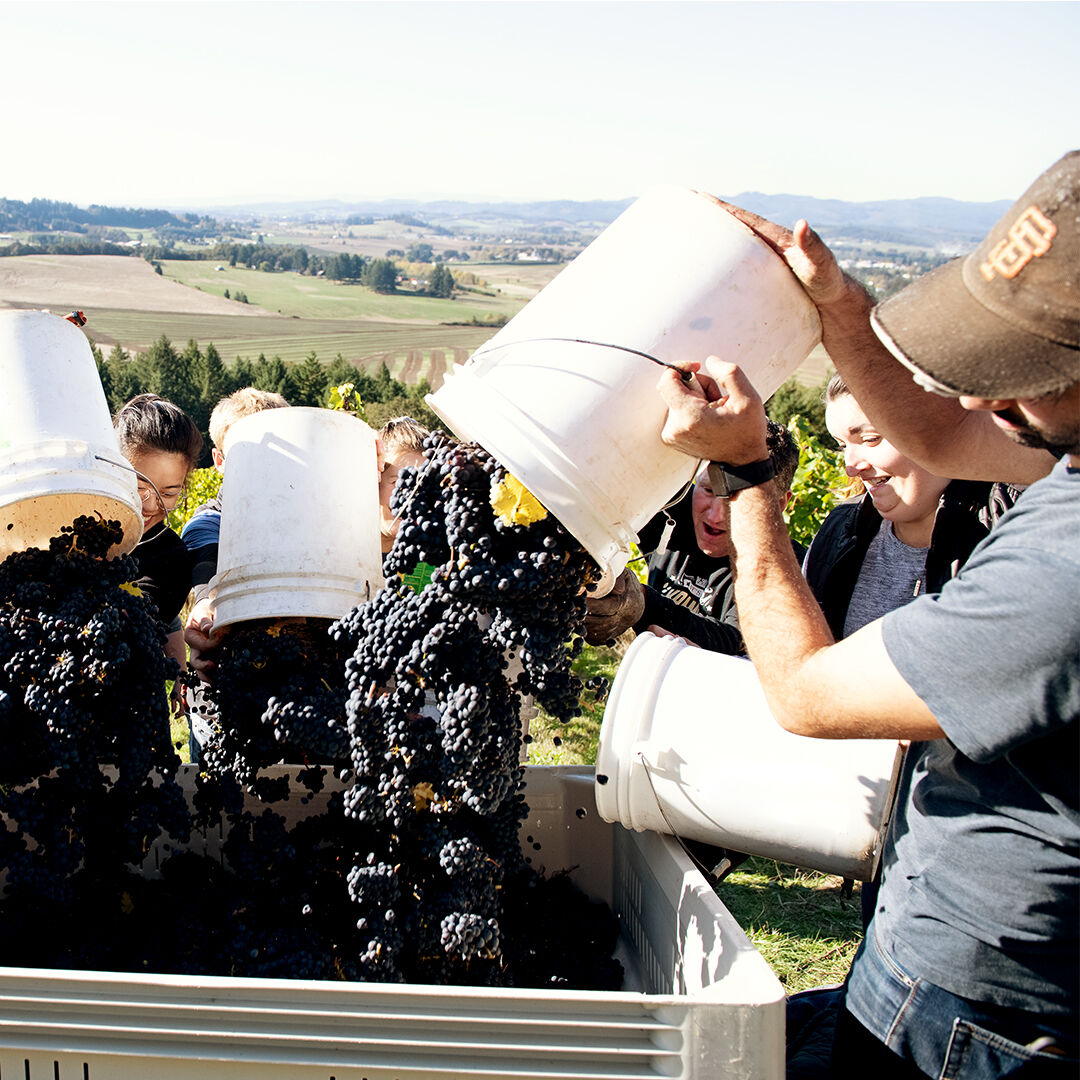
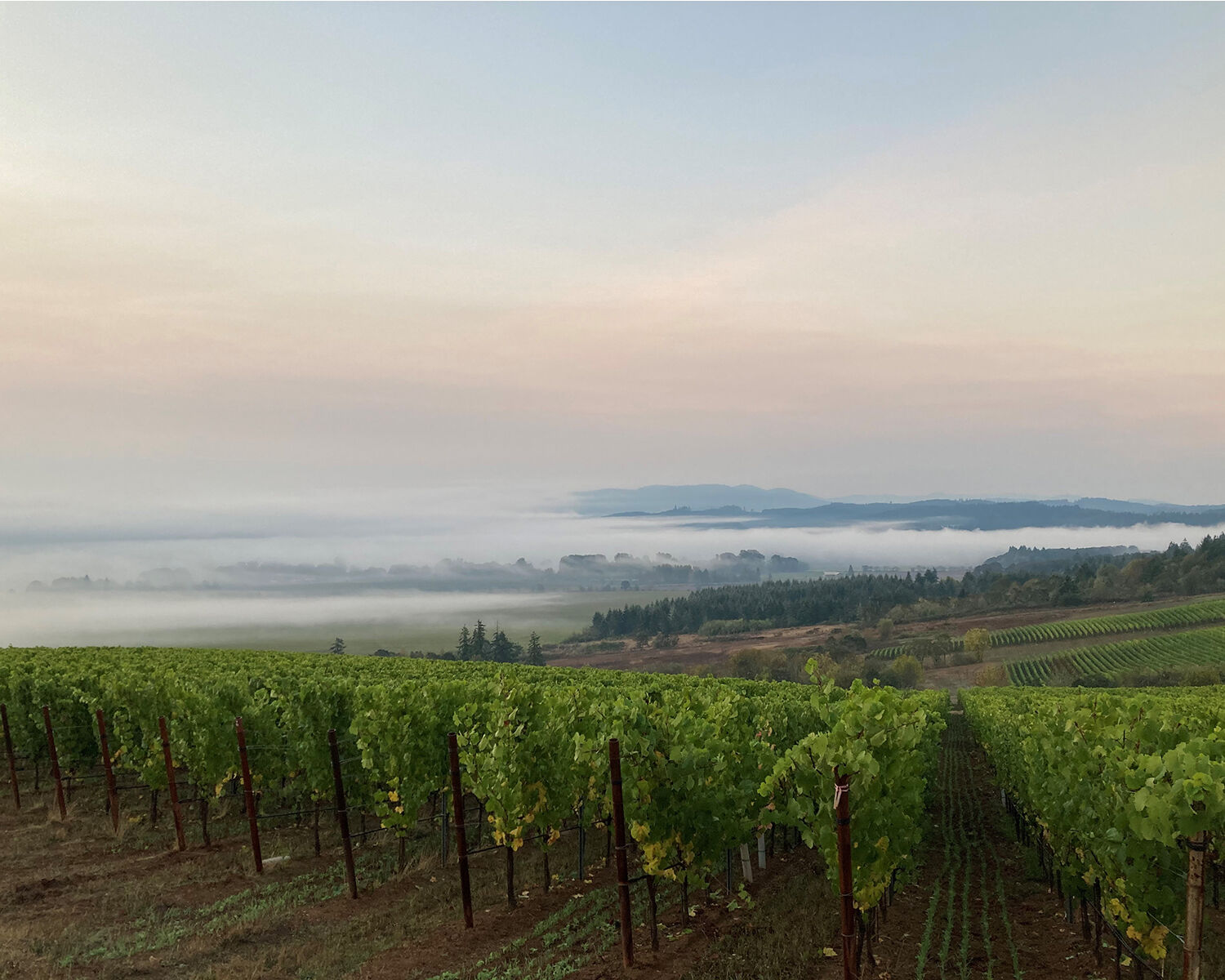
Sustainable farming practices that respect the environment, soil, plants, and people are another expression of our commitment to genuine quality. To promote healthy soil, we use compost, kelp, and cover crops among the vines. We also encourage beneficial organisms such as earthworms and fungi to live in the soil. To maintain the health of our vines, we use organic fertilizers and fungicides rather than synthetic chemicals. No chemical herbicides are used. Sustainable viticulture is extremely labor intensive—we employ a dedicated vineyard crew year round who touch each of the more than 200,000 vines on our estate at least 24 times annually, further ensuring consistency and quality. The benefits far outweigh the extra work. WillaKenzie wines better reflect our soils and our clonal diversity through absorption of soil minerals and contain fewer residual chemicals. The longevity of the soil is greatly enhanced, and our workers’ exposure to chemicals is greatly minimized.
Creating a Balanced Vineyard Ecosystem
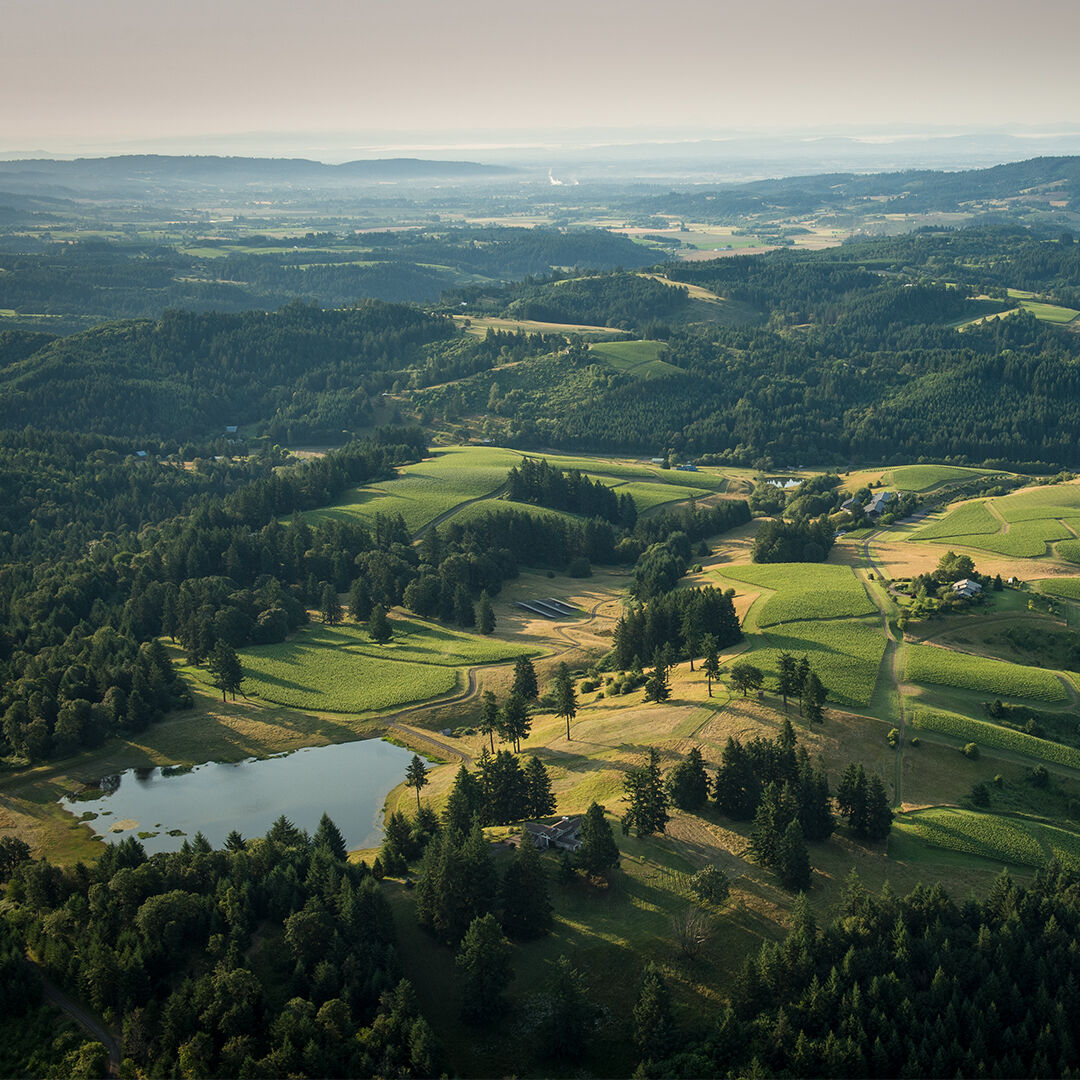
Visitors to the winery often ask us about the trees on our property. Only a quarter of our Yamhill estate is under vine. The rest is devoted to grass pasture and native plants (including Douglas fir, maple, and oak trees) to preserve the original balance of the ecosystem including watersheds. The forests on our property are home to beneficial predators such as hawks, owls, coyotes, and vultures, which help control rodents.
Pioneering Sustainable Practices in Oregon
WillaKenzie Estate was the first winery to receive the Low Input Viticulture and Enology (L.I.V.E.) winery certification. L.I.V.E. is an Oregon-based nonprofit organization that provides education and certification for vineyards using international standards of sustainable viticulture practices in winegrape production. These standards come from a vision of the vineyard as a whole system and promote biological diversity, natural fertility, and ecosystem stability through responsible land stewardship.
L.I.V.E. partners with Salmon-Safe to restore and maintain healthy watersheds. Salmon-Safe is an independent nonprofit devoted to restoring agricultural and urban watersheds so that salmon can spawn and thrive. Native salmon are a key species within the Pacific Northwest and their conservation is closely intertwined with the health of our larger ecosystem.
IN THE WILLAKENZIE WINERY
Responsible Winemaking
WillaKenzie Estate was also the first winery to be awarded Oregon Certified Sustainable Wine (OCSW) status for its 2008 vintage wines. The OCSW program is intended to increase awareness of wineries’ adherence to sustainable programs, communicate the importance and guarantee of certification, and encourage distribution of sustainable wines so consumers can access them. The program focuses on three pillars: responsible agriculture, responsible winemaking, and third-party certification. In order to earn certification, both our winery and 97% of our fruit must be
certified by L.I.V.E, USDA Organic, Demeter Biodynamic, or the Food Alliance. In addition, our fruit must be certified Salmon-Safe. When you see the OCSW logo on our and other Oregon wines, you can rest assured the wine was grown and made responsibly.
Innovation & Sustainability
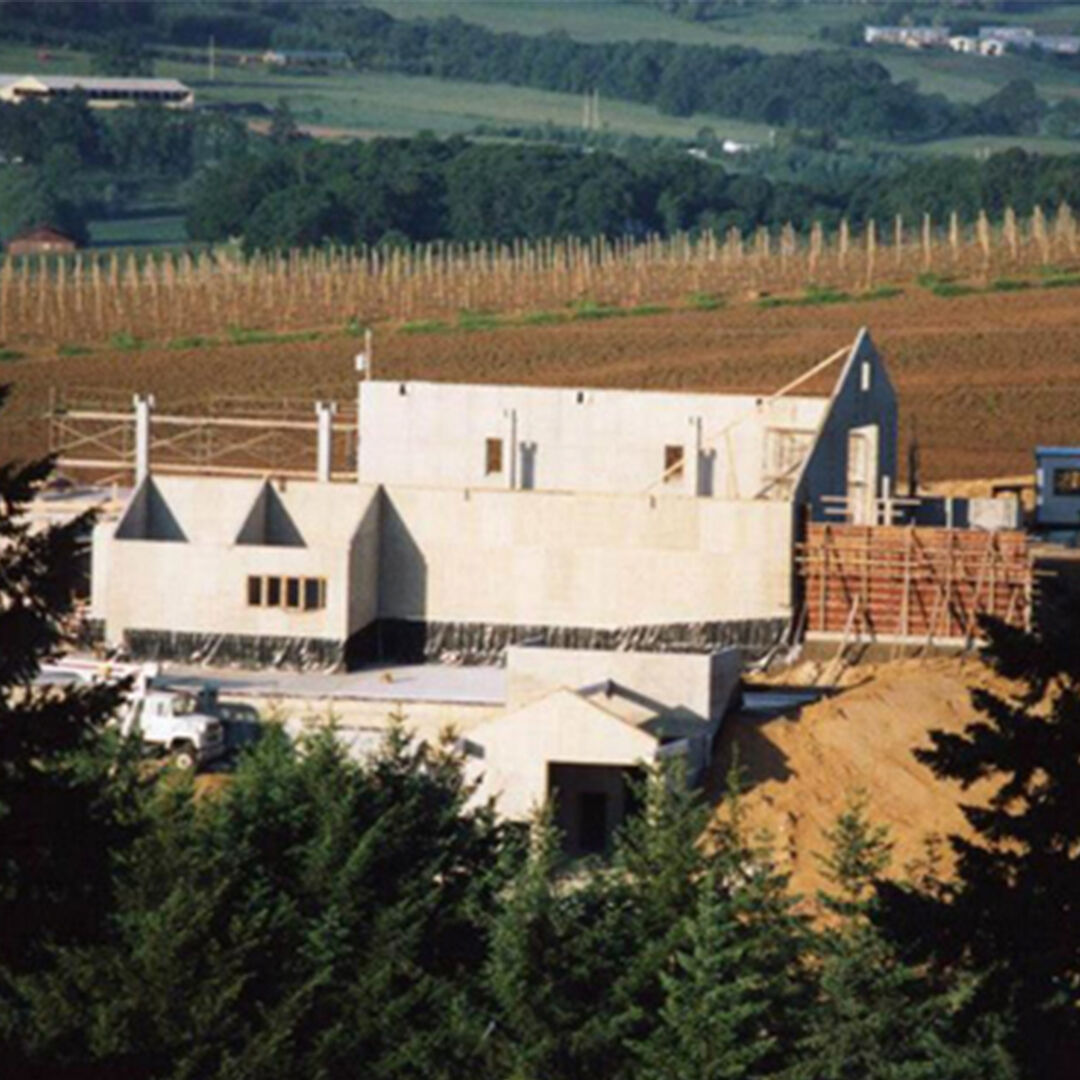
Our winery is sustainable in many other ways, as well, with innovation and ingenuity always playing a key part. Our underground cellars keep our wines cool naturally, and we use gravity rather than pumps to transfer our wine. We recycle winemaking by-products for compost and have even developed a system that allows us to capture and reuse some of the CO2 produced during fermentation. In 2010, a solar array was completed at our Yamhill estate, producing almost half of our energy needs.