Categories
At WillaKenzie Estate, our devotion to the land runs as deep as our passion for exceptional Pinot Noir and Chardonnay. Our very name serves as a tribute to the ancient, sedimentary Willakenzie soils that nurture our vines. We believe that creating terroir-driven wines requires a profound respect for the health of our soil and the ecosystem surrounding our vineyards. As stewards of this incredibly diverse estate, we are committed to preserving this land for future generations.
Genuine sustainability in winemaking requires more than good intentions. It demands rigorous standards, measurable actions, and an enduring commitment to work in harmony with nature. To guarantee that our ecological practices meet the highest standards, we look outward. We prioritize independent, third-party evaluations over internal assessments. These objective reviews hold us accountable while providing transparency and credibility to our sustainability journey.
Below is a snapshot of our sustainability credentials:
- First LIVE-Certified winery in Oregon, Member #001
- Estate vineyard and winery are both LIVE-Certified
- Salmon-Safe Certified
Crucially, these certifications rest on rigorous third-party verification rather than simple self-reporting. From tending to the vineyard rows to moving grapes through the cellar, our practices are independently reviewed, relentlessly refined, and openly shared. We believe that trust, much like respect for a great wine, is earned over time.
Q: What does it actually mean to be "LIVE-Certified"?
LIVE—short for Low Input Viticulture and Enology—is the gold standard of sustainability certifications for vineyards and wineries in the Pacific Northwest. This internationally accredited non-profit organization educates and certifies winegrowers who meet a detailed checklist of requirements that are grounded in scientific research, regional specificity, and continual improvement.
As proud members, we pledge to uphold stringent standards that touch every aspect of our estate. These include fostering biodiversity, minimizing agricultural inputs, nurturing soil vitality, practicing mindful energy and water management, reducing greenhouse gas emissions, ensuring worker well-being, and cultivating a positive community impact.
Independent auditors review every facet and goal of our sustainability efforts. This transparency not only serves to safeguard our environment, but it also ensures we consistently craft high-quality wines that ultimately reflect their terroir.
Q: How does WillaKenzie Estate meet LIVE’s biodiversity requirements?
The LIVE certification requires members to dedicate at least 5% of their property to natural habitat. At WillaKenzie Estate, we reach far beyond that standard.
We intentionally leave 75% of our 420-acre estate unplanted. This choice allows our native pastures, fir tree forests, and wildlife corridors to thrive undisturbed. By giving nature the space it commands, we ensure our vines and the surrounding ecosystem can seamlessly coexist.
Q: What LIVE practices does WillaKenzie implement to promote soil health?
Our viticulture team, guided by Director of Farming Leti Catoira, uses flowering and cover crops to build soil health, reduce the need for tilling, and provide food for pollinators and wildlife.
By integrating native cover crops in every other vine row, we enrich the soil's organic matter. This living, breathing blanket keeps the soil cool, prevents erosion, and aerates the ground beneath. Consequently, our vines are encouraged to send their roots deep into the earth. Cover crops, which suppress invasive weeds, also work in tandem with our policy of abstaining from herbicides in our vineyard.
Passionate about sustainability, Leti Catoira is herself heavily involved in LIVE. A member of LIVE’s Board of Directors, Leti has served as the organization’s technical committee chair for the Willamette Valley since 2017. Her leadership ensures that WillaKenzie Estate remains at the forefront of viticultural science, allowing us to translate the most advanced research directly into our farming practices.
Q: What is WillaKenzie doing to cut its energy and water use, as well as greenhouse gas emissions, to comply with LIVE?
We take a holistic approach to reducing our environmental footprint, considering every decision at our estate through the lens of long-term stewardship.
Harnessing Nature's Power and Gravity
As early pioneers of renewable energy in the region, WillaKenzie Estate installed solar arrays in 1970 that today supply 50% of our winery’s energy needs. Beyond solar power, our multi-level winery uses a gravity-flow design rather than electric pumps. This gentle approach not only conserves power but also protects the delicate aromatics and structural integrity of our wine throughout the vinification process.
Precision Viticulture and Water Conservation
When it comes to water usage, precision is paramount. We irrigate only when absolutely necessary. Our viticulture team uses a pressure chamber to measure the exact internal water stress of the vines, ensuring they are maintained at the perfect physiological threshold for producing concentrated, terroir-driven fruit.
When irrigation is required, our hilltop pond provides a sustainable water source during the arid peak of the growing season. Furthermore, our extensive use of cover crops augments the soil’s organic matter, which directly increases its water-holding capacity.
Rethinking Our Carbon Footprint
While reducing energy consumption lowers our carbon footprint, we recognized the need to address the wine industry's greatest source of greenhouse gas emissions: heavy glass bottles. Starting with our 2022 Willamette Valley Pinot Noir and Chardonnay, we transitioned this tier to lightweight glass. This thoughtful evolution has reduced our packaging and shipping emissions by 23% annually, without compromising the quality or presentation of our wines.
In the vineyard, our reduced-tilling practices ensure that the soil naturally sequesters nitrous oxide, a potent greenhouse gas. When vines must be replaced, we mulch them back into the hillside rather than burning them, effectively trapping the carbon dioxide within the earth.
Sustainable Luxury in the Tasting Room
In our tasting room, we minimize waste by printing our tasting menus on 100% post-consumer paper stock and offering our members reusable tote bags for their wine club allocations. We have also installed a filtered water tap, saving thousands of single-use plastic bottles while ensuring our guests enjoy a high-end hospitality experience.
Q: How does WillaKenzie fulfill the social obligations of LIVE, regarding workers and the community?
We provide comprehensive healthcare, rigorously maintain safe and healthy working conditions, and ensure fair, competitive wages for our essential teams in the field.
Our Rooted for Good employee volunteer events are one way that we are expanding biodiversity and supporting native habitats on our lands. The Sustainability team is thrilled to have kicked off our first annual event in Oregon this year. If you missed the event, we hope that you can join us next year. The team planted 79 trees, shrubs, and plants on the hillside behind the solar panels and pulled over 220 pounds of invasive weeds.
Our commitment to social equity reaches well beyond our own property lines. WillaKenzie Estate is a proud, long-time supporter of ¡Salud!. This vital non-profit organization provides free, accessible healthcare services for seasonal vineyard workers and their families throughout the Willamette Valley.
We also remain deeply invested in the well-being of our local neighbors and the communities we call home. Each year, we participate in the YCAP Meltdown to support the Yamhill Community Action Partnership Food Bank and in the annual KGW-TV toy drive to bring holiday joy to families across Oregon and southwest Washington.
Q: You are "Member #001." Why was being first so important?
Pioneering sustainability in wine was a natural extension of our founding philosophy. From the moment the first vines were planted at WillaKenzie Estate, we knew that taking care of our soil and surrounding ecosystems was paramount. We did not just want to participate in sustainable agriculture; we wanted to lead by example. Becoming Member #001 demonstrated that a high-end winery could produce luxurious, world-class wines while strictly adhering to the highest standards of ecological stewardship. It also allowed us to contribute to the evolution of the program itself, ensuring it would remain practical for growers while holding real meaning for guests.
Q: What is the connection between wine and "Salmon-Safe" certification?
The health of our local watersheds is inextricably tied to the sustainability of our vineyards. The Pacific Northwest is defined by its magnificent rivers and the native salmon that inhabit them. By maintaining Salmon-Safe practices, which are required of all LIVE-certified vineyards, we ensure that agricultural runoff does not harm these delicate aquatic ecosystems. This involves careful management of our soils to prevent erosion, responsible irrigation practices, and avoidance of pesticides that could compromise water quality.
In 2025, WillaKenzie Estate was honored to be named to LIVE’s shortlist for the "Hero of Salmon" award. This recognition celebrates the extensive ecological infrastructure we have installed across the estate to protect our native aquatic life.
Q: Does "Low Input" farming actually change the taste of the wine?
Yes. By intervening less, we allow the authentic characteristics of the vineyard to shine through in the wines. Low-input farming encourages our vines to grow deeper root systems and fosters healthier, more vibrant soils. This natural resilience creates more balanced vines that produce grapes with greater flavor concentration, nuanced complexity, and a pure expression of our various terroirs. The restorative agricultural practices we adopt in the vineyard translate directly into the finesse and structure of the wine in your glass.
Q: Why did we choose these specific certifications over others?
When evaluating certifications, we looked for third-party verified programs that were regionally specific, research-based, and ecologically sound. LIVE and Salmon-Safe are not mere marketing labels placed on a bottle. They are the gold standard of sustainability certifications in the wine industry.
LIVE itself undergoes an annual audit and accreditation by agroecology experts at the International Organization for Biological Control. This additional oversight means LIVE and its members are not self-certifying or greenwashing, but are rather implementing sound environmental practices. Furthermore, LIVE’s programs are shaped by the latest research from Oregon and Washington State Universities.
It was also important to us that we never rest on our laurels and continue to improve our sustainability efforts. LIVE’s requirements are not “set it and forget it” programs. For our winery to achieve certification, for example, we must identify projects every year for continuous improvement.
Finally, LIVE grew out of and is maintained by a community of winegrowers who are making a deliberate choice to be sustainable. It aligns with how we already farm and make wine—thoughtfully, collaboratively, responsibly, and with humility toward the land and our communities.
Q: How can a guest see these certifications in action at the Estate?
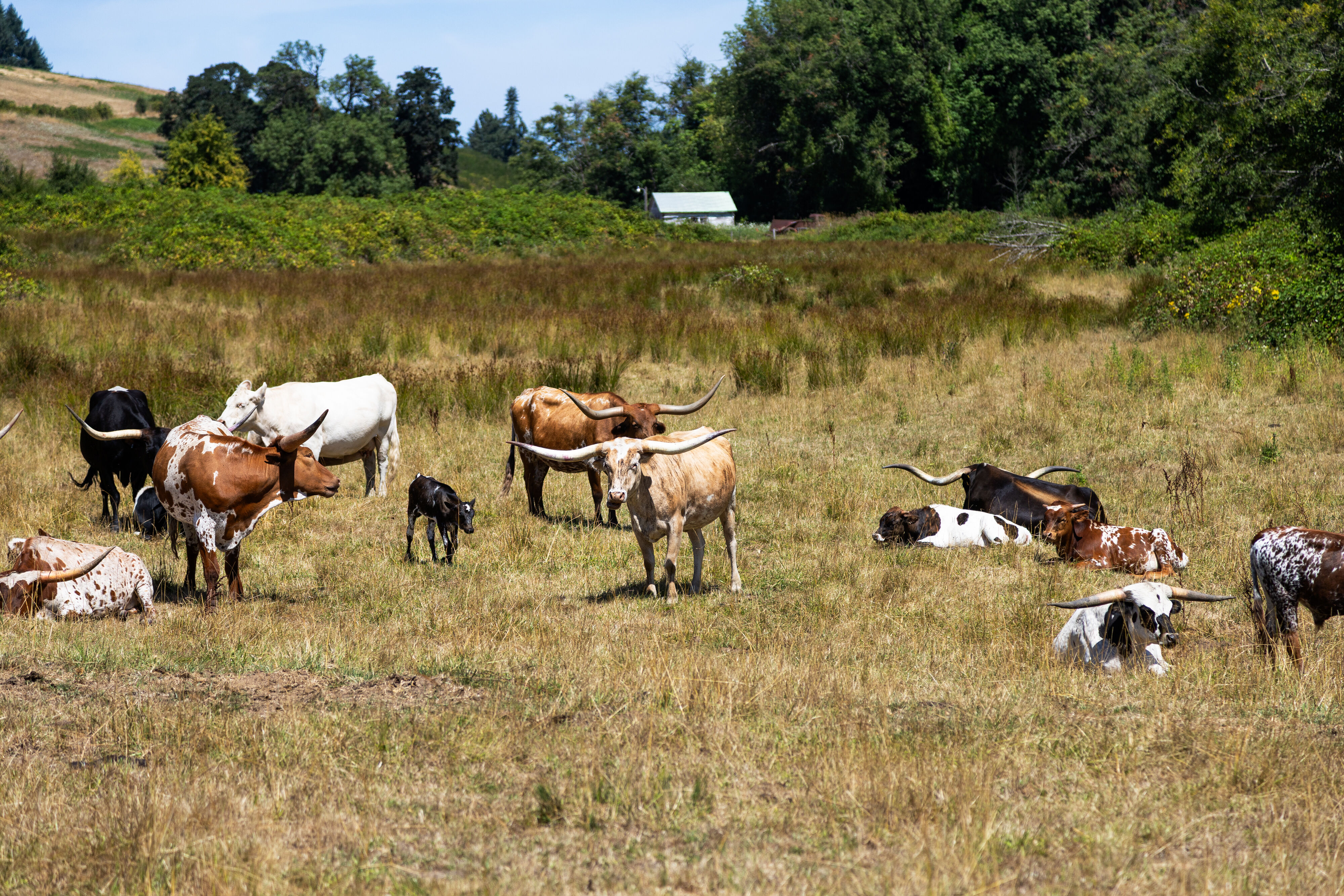
When you visit WillaKenzie Estate, our commitment to the environment is visible all around you. Fir trees surround and weave between our vineyard parcels. Native cover crops thrive in every other vineyard row. A sizeable herd of Longhorn cattle grazes across the property, helping control weeds and soil erosion. You’ll see wildflowers and fruit trees, pollinated by the more than 30,000 bees that reside in bee boxes near the top of our estate.
At our winery, you’ll see our solar arrays and our gravity-fed design that gently moves the grapes through the vinification process without electricity.
In our tasting room, you’ll notice small but important touches like our sustainable tasting menus, reusable totes, and our filtered water tap that eliminates single-use bottles. And when you take home a bottle of our Willamette Valley Pinot Noir or Chardonnay, you will observe our transition to lighter-weight glass.
Sustainability as a Living Commitment
For us, certification is a continuously evolving framework—not a finish line. As the landscape of winery sustainability advances, WillaKenzie Estate refines its practices year after year, regularly evaluating how we farm and make wine to reduce our footprint and strengthen the vitality of our estate. Our commitment is not to perfection, but to continual improvement—guided by curiosity, respect for the land, and a deep sense of responsibility for stewarding this remarkable property so that future generations can experience the pure expressions of this estate and the pristine beauty of the Willamette Valley.
